
Turning Operational Chaos Into Scalable, Executable Systems
For founders and teams ready to replace scattered processes with structured systems, clear workflows, and aligned execution.
Operations Consulting | Systems Strategy | Team Training & Development
Bring one process or SOP. We’ll break it down and start building the system, live.
Why It Starts With Execution
Most businesses don’t have a strategy problem. They have an execution problem.
Systems exist, but they aren’t structured.
Teams are working, but nothing is aligned.
That’s where I come in.
What I Do Best
I fix what isn’t working inside businesses.
Not on the surface.
Inside the systems, workflows, and structure that determine whether a business runs smoothly or constantly feels like chaos.
I’ve built and scaled businesses. I understand what it takes to keep everything moving.
But my strength isn’t in running everything.
It’s in stepping in, identifying what’s broken, and building the systems that make execution possible.
I design operational structure.
I implement workflows.
I create clarity where there isn’t any.
I’m not here to be the face of your business.
I’m here to make sure it works.
This is the work you’ll see throughout my portfolio and the approach behind every 30-Minute Operational Fix Session.
Focused. Intentional. Built around what actually works.
Built Through Experience,
Refined Through Execution
I’ve spent over 20 years building, improving, and optimizing systems, long before I ever called it operations.
At 9, I created and sold handmade products door-to-door; learning early how to take ownership and follow through.
At 12, I managed a fully booked babysitting schedule; balancing demand, time, and responsibility.
At 14, I entered the workforce and quickly moved into leadership; learning how to manage people and performance.
By 19, I was training teams, improving systems, and working alongside leadership to optimize operations at scale.
Over time, I pushed myself beyond sustainable limits and learned the hard way that effort alone doesn’t create stability.
Structure does. Systems do.
That’s the difference I bring into every business I work with.
Where It All Came Together
One of the most defining chapters in my career was with InDemand Services.
That’s where everything clicked.
I stepped into a recruiting role, intentionally avoiding management for a short time.
But it didn’t take long.
I naturally moved into the work I do best, improving systems, supporting teams, and optimizing how things function behind the scenes.
Within months, I was:
Training recruiters and improving team performance
Working with engineers to enhance a custom ATS
Streamlining hiring processes and job workflows
Overseeing scheduling operations across the team
Advancing into a Director of Operations role
That experience gave me something most roles don’t, the ability to think, improve, and execute inside a business at every level.
It shaped how I approach operations today.
Not from college. From experience.
What I Bring to the Table
I don’t just identify operational problems. I fix them at the system level.
Streamlined Operations
What:
I identify where your operations are slowing you down, creating confusion, or causing unnecessary manual work.
How:
We break down one real process, remove friction points, and restructure it into a clear, repeatable workflow your team can actually follow.
Build and Optimize Systems
What:
I ensure your systems are not just set up, but set up to support how your business actually runs.
How:
During the session, we review how your tools are being used, identify gaps, and begin aligning them with your workflows so everything connects properly.
SOPs Teams Actually Follow
What:
I turn inconsistent processes into structured SOPs that are clear, usable, and relevant to each role.
How:
We take one process and define it step-by-step in a way that removes guesswork, making it easier for your team to execute without constant oversight.
Train Teams Based on Their Roles
What:
I help ensure your team understands not just what to do, but how to do it within your systems.
How:
I structure processes in a way that naturally supports training, so each role has clarity on expectations, responsibilities, and execution.
Improved Efficiency, Tracking, and Performance
What:
I identify where performance is unclear or inconsistent due to lack of structure.
How:
We establish simple ways to track progress, improve visibility, and ensure your operations support consistent results.
Systems don’t succeed without people who understand and trust them.
That’s why everything I build is designed to work in real life, not just on paper.
About the 30 Minute Operational Fix Session
This is a focused, hands-on working session.
We don’t talk about ideas, we work on what’s actually happening inside your business.
1. Identify the Right Problem
We start by reviewing the process or SOP you bring to the session.
Not surface-level, what’s actually breaking, slowing things down, or causing confusion.
2. Break It Down
We walk through the process step-by-step to uncover gaps, inefficiencies, and disconnects between your systems and your team.
3. Fix and Restructure
We begin restructuring the process into something clear, usable, and aligned with how your business actually operates.
4. Start Building the System
This is where execution happens.
We begin implementing the changes so you leave with real progress, not just notes.
5. Define Your Next Steps
You’ll leave knowing exactly what to do next, what to prioritize, and how to continue building from what we started.
You don’t need another strategy. You need something that works.
This Is For Your If:
You have an existing business, process, or system that isn’t working the way it should
You can clearly identify at least one operational issue or breakdown
You’re ready to take action, not just talk about ideas
You want structure, clarity, and systems your team can actually follow
You value execution and are open to making real changes
This Is Not For Your If:
You’re looking for general advice, brainstorming, or “just picking my brain”
You don’t currently have a process, system, or SOP to work on
You’re not ready to implement changes or take action
You’re expecting a full business build-out in 30 minutes
You prefer high-level strategy without execution
Blogs & Articles

Be Mindful of Boundaries: The Difference Between Leadership and Chaos
Be Mindful of Boundaries: The Difference Between Leadership and Chaos
Table of Contents
Why Boundaries Are Not Walls, They Are the Architecture of Trust
The Difference Between Leadership and Chaos in Practice
How the Absence of Documentation Creates Dysfunction
Why Surprise Projects Erode Trust Faster Than Failure Does
Accountability Starts at the Top, Not the Bottom
CEOs Must Provide Structure, Not Just Vision
When Leadership Has No Systems, Operations Collapse
Why Teams Cannot Perform Inside Systems That Do Not Exist
Client Access Is Not Optional, It Is Operational Infrastructure
How Business Master Suite Closes the Gap
Conclusion: Own the Structure, Lead with Clarity
There is a moment every growing business owner recognizes, the moment where what once felt like momentum begins to feel like noise. Decisions are being made in three different directions. Team members are duplicating work or missing it entirely. Clients are confused about where to go and what to expect. And the person at the top, who built this thing from the ground up, is somehow the last to know that anything is wrong. That moment is not a staffing problem. It is not a systems problem, at least not on the surface. It is a leadership boundary problem.
The difference between leadership and chaos is not talent, funding, or market timing. It is structure. It is the presence, or dangerous absence of clearly defined roles, documented processes, accountability frameworks, and operational systems that hold everything together when the founder steps away from the room. Without these guardrails in place, even the most brilliant business vision deteriorates into a revolving door of miscommunication, misaligned priorities, and unmet expectations.
We work with small business owners and entrepreneurs who are often surprised to discover that the chaos they are experiencing is not a reflection of their ambition, it is a consequence of building fast without building deliberately.
This article exists to name that gap clearly and give you a framework for closing it. Because leadership is not just about inspiring people to move forward. It is about building the road they walk on.
Why Boundaries Are Not Walls, They Are the Architecture of Trust

There is a persistent misconception in business culture that boundaries limit growth. In reality, the opposite is true. Boundaries create the conditions under which growth becomes sustainable and repeatable.
Think of a well designed highway. The guardrails do not stop drivers from reaching their destination. They prevent drivers from veering off the edge on the way there. Leadership boundaries in business function the same way, they define how work flows, who owns what, and what happens when something goes off course.
Without these structures, every new hire inherits ambiguity. Every client relationship is built on informal expectations. Every process lives inside someone's head rather than inside a system. That is not a foundation. That is a liability.
When boundaries are clearly established, teams move faster because they know the rules of the road. Clients feel more confident because they know what to expect. And leaders spend less time putting out fires because the systems prevent most fires from starting.
The Difference Between Leadership and Chaos in Practice
Leadership, at its operational core, is the deliberate management of structure, communication, and accountability. Chaos is what fills the space when those three things are missing.
The difference between leadership and chaos shows up in small, specific ways before it shows up in catastrophic ones. It looks like a team member who is unsure whether they have the authority to make a decision. It looks like a client who received conflicting information from two different people. It looks like a project that launched without a brief, a timeline, or a defined outcome.
None of these situations are the result of bad intentions. They are the result of undefined systems and unclear ownership. Leadership requires you to close those gaps proactively, not reactively.
A business operating under genuine leadership has documented workflows, clear lines of responsibility, and internal communication systems that keep everyone oriented to the same goals. It does not run on memory, goodwill, or heroic individual effort. It runs on structure.
How the Absence of Documentation Creates Dysfunction
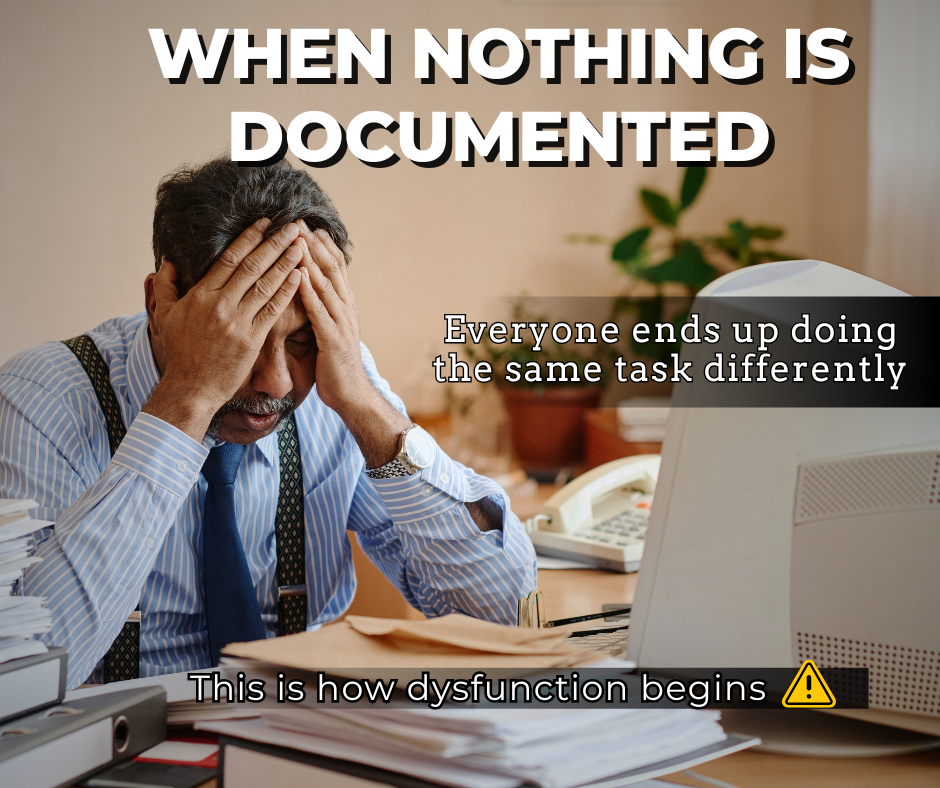
Business process documentation is one of the most undervalued operational tools available to small business owners. And yet, most small businesses operate almost entirely without it.
When processes are not documented, knowledge becomes siloed. One person knows how client onboarding works. Another person manages the vendor relationships but has never written down the terms. The CEO knows the strategy but has not communicated it in a way the team can act on daily.
This creates a fragile organization, one that is dangerously dependent on specific individuals and deeply vulnerable to disruption. When a key team member leaves, gets sick, or simply has a bad week, the operation suffers disproportionately.
Documented systems are the organizational memory of your business. They allow delegation to happen cleanly, onboarding to happen efficiently, and accountability to exist meaningfully. Without them, every mistake becomes a surprise, and every correction becomes a negotiation.
Why Surprise Projects Destroy Trust
Few things destabilize a team faster than a project that arrives without context, without preparation, and without a clear owner. The "surprise project" is a symptom of a leadership environment where decisions are made impulsively and communicated reactively.
When a team is handed work without proper framing, no timeline, no scope, no resources, they are being set up to either fail or scramble. Both outcomes are demoralizing. Both outcomes erode trust in leadership over time.
Operational clarity is not just about efficiency. It is about respect. When you communicate projects clearly, with defined objectives and realistic expectations, you signal to your team that their time and effort matter. That signal builds the kind of trust that holds organizations together under pressure.
A workflow management system that includes project intake, task assignment, and status tracking eliminates the surprise dynamic entirely. Work becomes visible. Ownership becomes clear. And the team can focus on execution instead of interpretation.
Accountability Starts at the Top, Not the Bottom
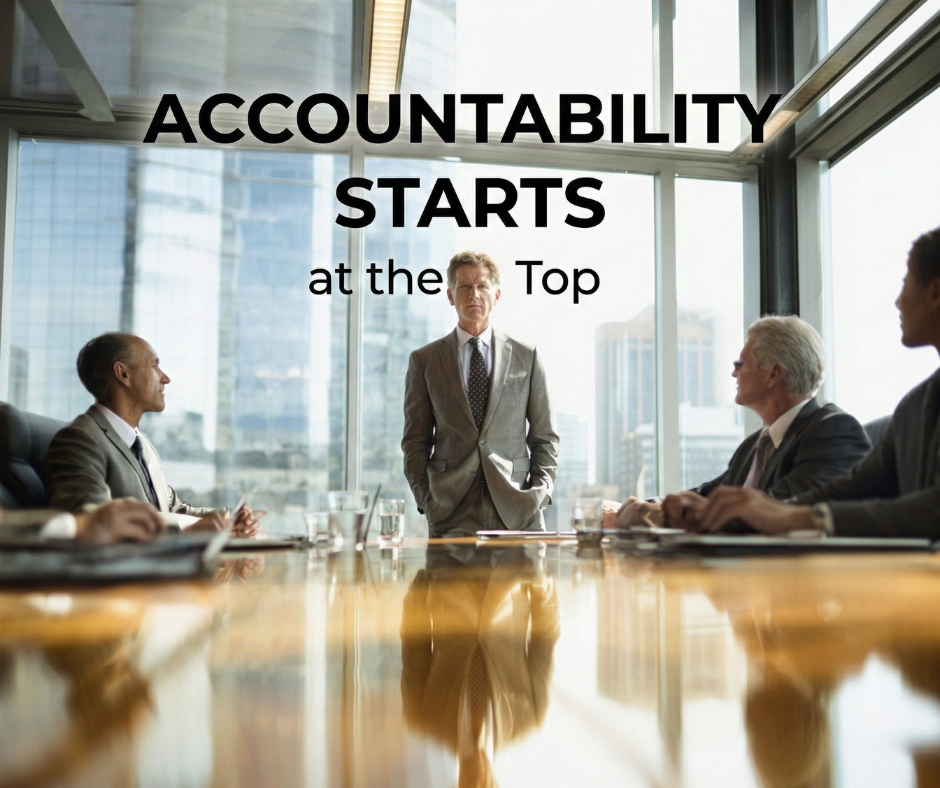
It is easy to identify accountability failures at the team level. Missed deadlines. Dropped tasks. But in most cases, those failures trace directly back to a failure of CEO responsibility and ownership at the leadership level.
If a leader has not defined what accountability looks like within the organization, what the standards are, how performance is measured, and what happens when expectations are not met, then holding team members accountable becomes subjective and inconsistent.
A team accountability structure requires the leader to go first. It requires defining the standards before expecting them to be met. It requires building the systems that make accountability visible, rather than relying on personal rapport or informal observation.
This is not about control. It is about fairness and clarity. When everyone understands what is expected and how it will be measured, accountability stops feeling punitive and starts feeling professional.
CEOs Must Provide Structure, Not Just Vision
Vision is essential. Without it, there is no direction. But vision without structure is just inspiration without execution. And in a growing business, execution is everything.
The CEO who communicates a bold vision but has not built the infrastructure to support it is asking their team to run a race without a track. The team may be motivated. They may be talented. But without structured leadership systems, that energy has nowhere to land.
CEO responsibility and ownership extends beyond the big picture. It includes ensuring that the organization has the tools, processes, and communication systems it needs to turn vision into daily action. It includes building an operational control platform that keeps work visible and accountable across every department.
The most effective leaders we have seen are not just visionary, they are architectural. They build the environment in which their team can succeed, and they maintain that environment with the same intention they bring to strategy.
Book a strategy call to discuss what structure looks like for your specific organization.
When Leadership Has No Systems, Operations Collapse
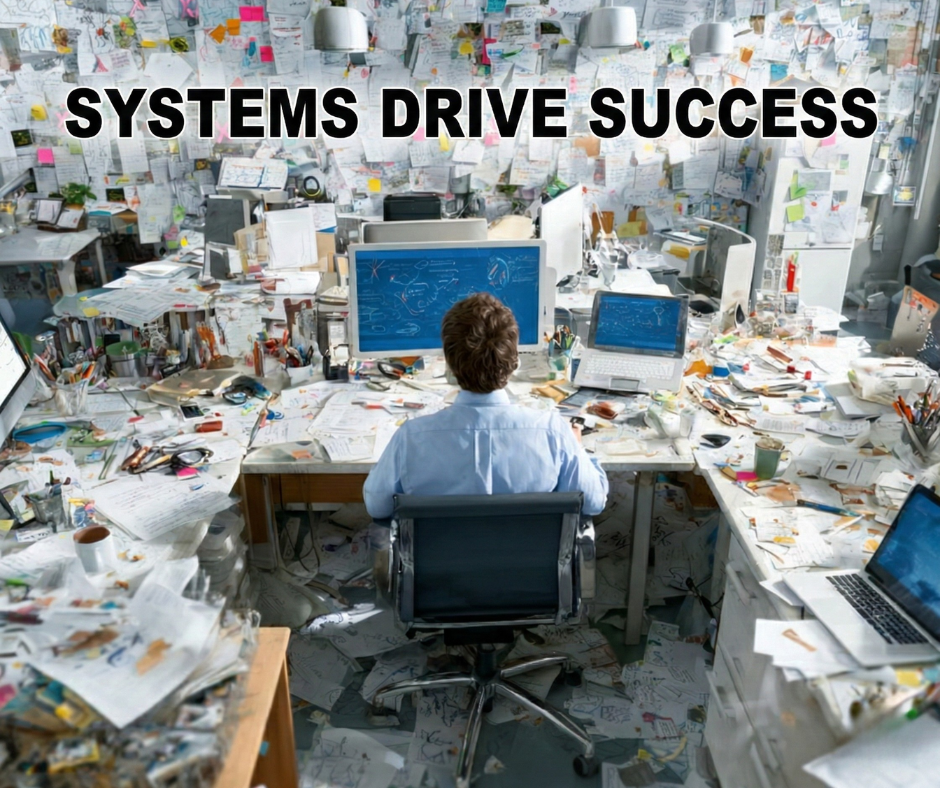
A business can survive for a period on the strength of its founder's energy and instincts. Many do. But that model does not scale, and it does not endure.
Leadership without systems creates operational chaos in predictable patterns. Communication happens informally, which means critical information gets lost. Decisions are made without documented rationale, which means they cannot be evaluated or improved. Work is assigned verbally, which means accountability is impossible to enforce.
As the business grows, these informal habits compound. What worked when there were three people in the room breaks down entirely when there are fifteen. What was manageable as a startup becomes unsustainable as an organization.
Structured leadership systems are what allow a business to grow beyond its founder. They are the operating infrastructure that makes delegation possible, decision making consistent, and outcomes repeatable.
Why Teams Cannot Perform Inside Systems That Do Not Exist
We often hear business owners describe their team as "not performing." When we look closely, the problem is almost never the people. The problem is the environment they have been placed in.
A talented team member cannot deliver consistent results without a clear scope of work. They cannot collaborate effectively without internal communication systems that define how information flows. They cannot grow professionally without feedback structures that tell them where they stand and what is expected next.
Teams are a reflection of the systems they operate within. When those systems are absent or inconsistent, even high performing individuals begin to disengage, second guess decisions or duplicate efforts, not because they are underperforming, but because they have no reliable operating environment to perform within.
Building that environment is a leadership obligation. It is not something that happens organically. It must be designed, documented, and maintained. Schedule your strategy session to begin building that environment intentionally.
Client Access Is Not Optional, It Is Operational Infrastructure
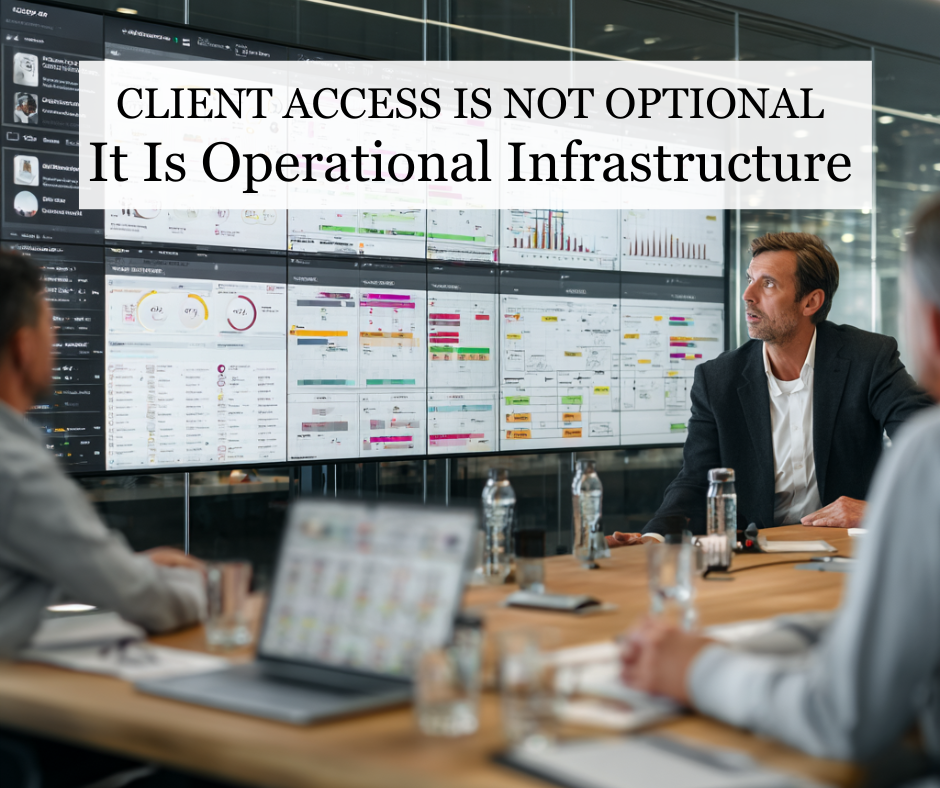
The most overlooked dimension of operational chaos in small businesses is not internal at all, it is the client having experience. Specifically, how clients access information, communicate with the business, and manage their relationship with your services.
Most business owners rely on a patchwork of email threads, shared folders, and informal messaging channels to manage client communication. The result is predictably chaotic, clients who feel uninformed, documentation that is scattered, and a business that spends significant time managing confusion instead of delivering value.
A membership portal for clients is not a luxury. It is the infrastructure that brings order to the client relationship. When clients have a dedicated, structured access point where they can view deliverables, communicate clearly, track progress, and access relevant documents and the relationship becomes professional, transparent and manageable.
Here is the critical problem: most platforms and operating systems do not include structured client access functionality as a standard feature. Business owners are expected to piece together third party tools and hope they integrate. The result is a fragmented experience that reflects poorly on the brand and creates more administrative burden than it relieves.
Lack of structured client access creates chaos that mirrors internal operational chaos. Clients receive inconsistent communication. Deliverables get buried in email chains. Requests go untracked. And the business spends time it does not have managing the fallout.
How Business Master Suite Closes the Gap
Business Master Suite was built for exactly this problem. It is an operational control platform designed to give small business owners the infrastructure they need to lead with clarity, serve clients with consistency, and scale without operational breakdown.
Unlike generic project management tools or disconnected software stacks, Business Master Suite includes built-in membership portal functionality that gives clients a structured, branded access point for everything relevant to their engagement. No more scattered emails. No more chasing down documents. No more informal communication that creates confusion.
The platform also addresses the internal operational gaps that allow chaos to take root of the workflow management systems, documentation tools, accountability frameworks, and communication structures that bring everything under one roof.
This is not about adding more software to your stack. It is about replacing the fragmentation with one coherent operating environment that serves your team, your clients, and your leadership objectives simultaneously.
Start your structured growth plan and see how Business Master Suite can bring operational clarity to every layer of your business.
Conclusion: Own the Structure, Lead with Clarity
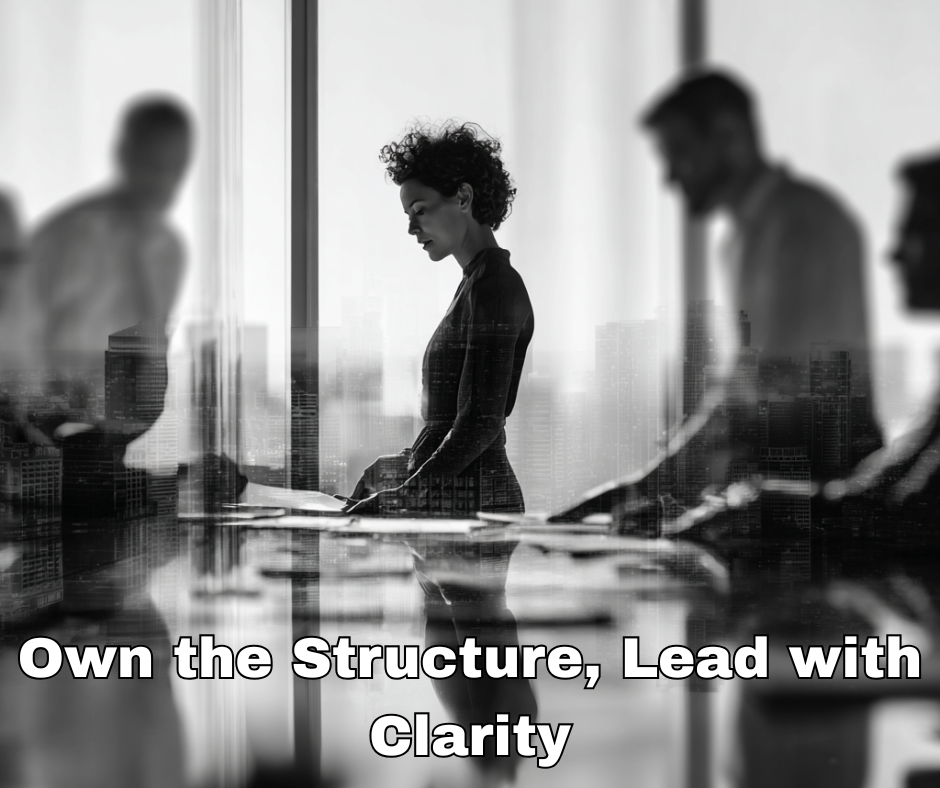
The difference between leadership and chaos is ultimately a choice. Not a dramatic, once in a decade choice but a series of deliberate, consistent decisions about how your organization operates, communicates, and holds itself accountable. Every undocumented process is a choice. Every unclear role is a choice. Every client relationship managed through informal channels is a choice. And those choices have compounding consequences that grow more costly with every month they go unaddressed.
Leadership is ownership. Not just of the vision, but of the environment in which the vision is pursued. That means building the systems before the growth demands them. It means creating accountability structures before the failures make them urgent. It means establishing the client access infrastructure before the confusion becomes a reputational problem. Structure is not a constraint on growth, it is the condition that makes sustained growth possible.
We built what we built because we have seen what happens when great businesses fail not from lack of talent or market, but from lack of operational foundation. You do not have to be one of those stories .Secure your operations consultation today and take the first concrete step toward a business that runs with the clarity, consistency, and confidence that your vision has always deserved.

Testimonials
People Love Us

Lorem ipsum dolor sit amet, consectetur adipiscing elit, sed do eiusmod tempor incididunt ut labore et dolore magna aliqua. Ut enim ad minim veniam, quis nostrud exercitation ullamco laboris nisi ut aliquip.
Jane Doe


Lorem ipsum dolor sit amet, consectetur adipiscing elit, sed do eiusmod tempor incididunt ut labore et dolore magna aliqua. Ut enim ad minim veniam, quis nostrud exercitation ullamco laboris nisi ut aliquip.
Jane Doe
For Hiring Managers
I’m currently open to Director-level operations roles focused on systems, team development, and organizational structure.
Available for roles where execution, structure, and team alignment are critical to growth.